Gas Line Pressure Testing in New Braunfels
Gas line pressure testing in New Braunfels gives you proof your piping is sound: new installations, repaired lines, and existing systems are all verified leak-free before gas flows.
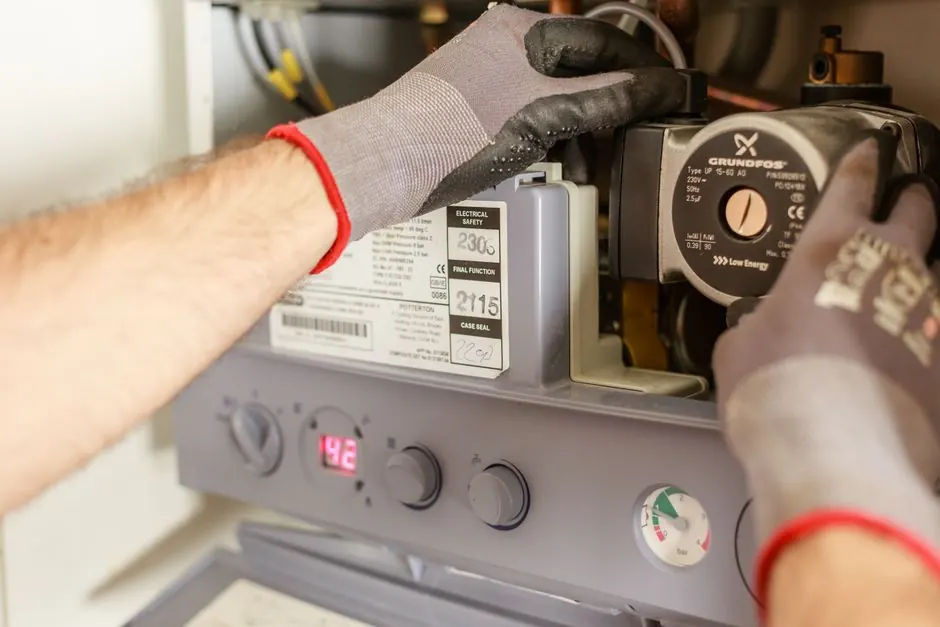
Service overview
Understanding Gas Line Pressure Testing in New Braunfels
Gas line pressure testing in New Braunfels is the definitive check that fuel gas piping is leak-free and ready for service. The isolated piping system is charged with air or inert gas to a specified test pressure, then held while calibrated gauges are monitored for any drop. It is the method the Texas fuel gas code requires for new work, and the same procedure that settles the question when an existing system is suspected of leaking. A test done to code, with proper isolation and calibrated equipment, leaves no room for doubt about the piping itself.
Pressure testing serves several distinct purposes around New Braunfels. New gas piping must pass testing before the installation is approved for service. Repaired lines are retested to confirm the fix holds. It is also the standard diagnostic after a scare: a gas odor that comes and goes, a meter locked by Atmos Energy after a leak report, or a real estate transaction where the buyer's inspector flags aging gas piping. In each case the test answers the same question with the same rigor: does this piping hold pressure, or does it not.
New Braunfels homeowners sometimes ask whether a pressure test can give a misleading result, and the honest answer is that procedure determines reliability. A test run on a system that was not properly isolated, pressurized to the wrong level, or read on an uncalibrated gauge proves little. A test run to code, with the piping fully isolated from the gas supply and appliances, charged to the correct pressure, and monitored on calibrated gauges for the full hold period, is conclusive about the piping under test. That is why every step of the procedure matters as much as the reading itself.
! Common warning signs
Gas odor with no visible source
When you smell gas but cannot find the source, a pressure test of the isolated piping determines whether the leak is in the fixed piping or at an appliance connection. That distinction decides what gets repaired.
Utility lockout or red tag
If Atmos Energy has locked your meter or tagged the system after a leak report, pressure testing is typically part of what is needed to demonstrate the piping is safe before service is restored.
System opened for modification
Any time gas piping is cut into for new appliances, rerouting, or repairs, the affected piping should be tested before service is restored. Fresh joints get proven before they go live.
Scope of work
What's included in Gas Line Pressure Testing
Our pressure testing service in New Braunfels is a complete verification procedure, not just a gauge reading:
-
01
System isolation
The piping under test is isolated from the gas supply and from appliances, with proper caps and plugs, so the test measures the piping alone and nothing else.
-
02
Test pressurization
The system is charged to the test pressure required by code for the application, using air or inert gas, never the fuel gas itself.
-
03
Monitored hold period
Pressure is monitored over the required hold time with calibrated gauges. Any drop is investigated, not dismissed.
-
04
Leak location and reporting
If the test fails, we locate the leak, explain the findings clearly, and outline what correction is needed before retesting.
Benefits of Professional Pressure Testing
A proper pressure test replaces uncertainty with proof. For new work, it satisfies code and inspector requirements. For existing systems, it tells you definitively whether the piping is sound or exactly where it is not, so decisions about repair or replacement rest on evidence.
Contact us nowTools and methods we use
Calibrated test gauges
Precision gauges, often with fine graduations, that reveal even small pressure changes over the hold period.
Test pumps and manifolds
Pressurize the isolated system smoothly and safely to the required test pressure without shocking the piping.
Leak detection solution
Applied to joints and fittings to pinpoint the exact location of any leak the test reveals.
Combustible gas detector
Used as a secondary check at connections after the system passes the pressure hold, confirming what the gauges showed.
Local execution
Pressure testing in New Braunfels follows the Texas fuel gas code requirements that local inspectors enforce, and those requirements are specific: test medium, test pressure, and hold duration all depend on the system type and operating pressure. Residential low-pressure systems, elevated-pressure runs, and new installations each have their own test parameters. We run every test to the parameters the code assigns to your system, with calibrated gauges and documented readings, so the result stands up to any inspector or utility review.
For existing homes in New Braunfels, pressure testing often comes into play after a scare: a gas smell that comes and goes, an appliance that was red-tagged, or a real estate transaction where the buyer's inspector questions older piping. Homes near Gruene and historic downtown with decades-old steel piping are common candidates, as are properties changing hands in fast-growing areas where inspectors look closely at gas systems. Whatever prompts the test, the procedure is the same: isolate, pressurize, hold, and read honestly.
Neighborhoods we serve around New Braunfels
- • Creekside
- • Vintage Oaks
- • Copper Ridge
- • Gruene area
- • Historic downtown New Braunfels
Before & after
What Pressure Testing Can and Cannot Tell You
Pressure testing is the gold standard for verifying gas piping integrity, but it helps to understand exactly what it proves and what it does not. A passing test proves that the isolated piping system, as configured at test time, holds pressure without leaking. It does not evaluate appliances, connectors downstream of the isolation points, or venting. Knowing that boundary is what makes the test useful rather than confusing.
This distinction matters in New Braunfels homes where the real question is often where a suspected leak lives. A homeowner smells gas intermittently; the test isolates the house piping from the meter and appliances. If the piping passes, the investigation correctly moves to appliance connectors, which are the more common source of intermittent odors. If the piping fails, the leak is in the fixed system and gets located and repaired. Either way, the test narrows the search instead of leaving it open.
For new installations, pressure testing plays a different role: it is the quality gate before gas ever flows. Code requires it because a new system has dozens of fresh joints, and even careful work deserves verification. The test is run after installation is complete but before the system is placed in service, so any defect is found while correction is still straightforward.
Test failures deserve honest interpretation too. A small pressure drop on a large system may indicate a minor fitting leak; a rapid drop suggests something significant, like an open end or a major joint failure. We report what the gauges actually showed and what it likely means, then locate the leak rather than guessing at it.
- ▸A passing test proves the isolated piping is leak-free at test time; appliances are evaluated separately.
- ▸Testing rules out piping problems, which often redirects the investigation to appliance connectors.
- ▸Every new installation must be tested to code before gas flows; skipping it is never acceptable.
- ▸Test results should be reported with actual readings so the failure's severity is clear.
Definitive Answers in New Braunfels
Proof, not guesswork
When gas safety is the question, a pressure test is the answer that settles it. We arrive with calibrated equipment, isolate the system properly, and run the test to code requirements. You get the gauge readings and a clear pass or fail, not a vague reassurance.
If the system fails, we do not stop at the bad news. We locate the leak, show you where it is, and explain the repair options. Many pressure test visits in the New Braunfels area end with the problem identified and a clear path to correction in the same conversation.
What to Expect During Gas Line Pressure Testing
System preparation
Gas supply is shut off, the piping is isolated from appliances with proper caps, and test gauges are connected at the right points.
Pressurization
The isolated piping is charged with air or inert gas to the code-required test pressure for your system type.
Hold and monitor
Pressure is held for the required duration while gauges are watched for any drop. The system must hold steady to pass.
Results and next steps
You get a clear pass or fail. Passing systems are documented; failing systems get leak location and a repair plan.
Understanding Pressure Testing Cost Factors
Pressure testing in New Braunfels is typically a contained service visit, but the scope varies with the system being tested. These factors shape the work involved:
System size and complexity
A small single-appliance run tests quickly; a whole-house system with many branches takes longer to isolate and verify.
Accessibility of test points
Systems with accessible isolation points and gauge connections test efficiently. Hard-to-reach piping adds setup time.
Follow-up investigation
If the test fails, locating the leak is additional diagnostic work, scoped by how the system is routed and where it is accessible.
Testing You Can Rely On
A pressure test is only as good as the procedure behind it: proper isolation, correct test pressure, calibrated gauges, and an honest read of the results. We run every test to the standard your inspector and your gas utility expect, and we document what we found.
Call (830) 953-4059Frequently asked questions
What is a gas line pressure test?
The piping system is isolated from the gas supply and appliances, charged with air or inert gas to a specified pressure, and held while calibrated gauges are monitored. If pressure holds steady for the required time, the system passes. Any drop means there is a leak to find.
When is pressure testing required?
Code requires testing for new gas piping installations and replacements before service begins. It is also the standard diagnostic when an existing system is suspected of leaking, after piping has been modified, or when a utility or inspector requires proof the system is sound.
How long does a pressure test take?
The hold period itself is defined by code for the system type, typically measured in minutes to hours. With setup, isolation, and documentation, most residential tests fit within a single service visit.
What happens if my gas line fails the pressure test?
We locate the leak using detection methods at joints and fittings, then explain the repair needed and what it involves. The system is retested after the correction to confirm it holds before service is restored.
Can you pressure test just part of my gas system?
Yes. Sections of piping can be isolated and tested independently, which is useful for narrowing a suspected leak to a specific run before committing to larger work.
Do I need to be home during the test?
Someone needs to provide access to the property, the gas meter, and appliance areas. Beyond that, the test itself does not require your involvement; the gauges do the talking.
Will the test damage my appliances?
No. Appliances are isolated from the test piping with proper caps before pressurization, so test pressure never reaches them.
Get reliable Gas Line Pressure Testing in New Braunfels today
Get a definitive answer about your gas piping. Contact us to schedule professional pressure testing in New Braunfels.