Gas Line Repair in Veramendi, New Braunfels, TX
Veramendi is one of the largest master-planned communities in northeast New Braunfels — thousands of homes built from the 2010s onward, with new streets still going in. The houses are modern, the HOA amenities are extensive, and nearly every home runs on natural gas: furnaces, water heaters, ranges, dryers, and increasingly, outdoor kitchens and fire pits. Because so much of Veramendi is new construction, the gas work here looks different from older parts of town. We see builder rough-ins that need verification before appliances are connected, builder-grade appliance hookups that homeowners want upgraded, and new buried lines for outdoor living projects. Gas Line Repair New Braunfels TX serves Veramendi with gas line repair, installation, leak detection, and inspection — careful, code-aware work for new builds, growing blocks, and the outdoor spaces Veramendi families actually use.
About this area
Why gas line repair in Veramendi matters
Why we serve here
Veramendi is the largest master-planned community in New Braunfels, and it is still growing. We serve its new builds, its established 2010s blocks, and the construction zones in between — because a brand-new home can still have a gas problem, and the fix always starts with understanding how the house was built. From rough-in verification to outdoor kitchen gas lines, we handle the work Veramendi homes actually need.
Gas line work shaped by new construction, modern homes, and outdoor living in northeast New Braunfels.
Veramendi sits in northeast New Braunfels, just off the IH-35 corridor, and it has become one of the fastest-growing residential areas in the city. Development began in the 2010s and continues today: modern single-family homes on planned streets, with parks, trails, pools, and amenity centers managed by the community's HOA. The homes share a generation — open floor plans, energy-conscious construction, and gas service for heating, hot water, cooking, and laundry. It is a community built around family life, and its gas systems were designed for exactly that: quiet, reliable, and out of sight.
New does not mean perfect. In Veramendi we regularly verify builder rough-ins before appliances are connected — checking supports, fittings, and sizing against the loads the homeowner actually plans. Builder appliance packages are often basic, and when a homeowner upgrades to a larger range, a gas dryer, or a tankless water heater, the original line may be undersized for the new demand. We calculate the real load, resize or reroute the line as needed, and pressure-test everything before the appliance is lit. Catching a sizing problem at installation is far cheaper than fixing it after the drywall is up.
Outdoor living is where Veramendi's gas work gets interesting. Newer homes here were built for backyard life — covered patios, outdoor kitchens, fire pits, and grill stations — and most of those features run on natural gas. Adding them means running a new buried line from the house or meter, sized for every appliance on the branch, buried at proper depth with protection, and pressure-tested before anything is connected. We also plan around the HOA: Veramendi's community standards govern what can be built and where, so we route lines and place stub-outs in ways that keep the finished project clean and compliant.
A growing community means active construction, and construction is hard on buried utilities. Grading, trenching, fence posts, landscape lighting, and even new sod can disturb a gas service line that was buried when the lot was bare dirt. Before you dig anywhere on your Veramendi property — for a fence, a patio, or a garden bed — call 811 so buried utilities are marked. It is free, it is the law before excavating, and it is the simplest way to avoid turning a weekend project into an emergency. If a line has already been nicked or exposed, we can inspect it, repair it, and verify it is safe.
Our work in Veramendi covers the full range: electronic gas leak detection, pressure testing, repair and replacement of damaged or undersized pipe, new gas line installation for appliances and outdoor projects, meter and riser service, and inspections for new homeowners who want to know exactly what they bought. Every repair is pressure-tested before the system goes back into service, and every installation is planned around the fuel-gas code requirements that apply locally. New build or lived-in, patio project or appliance upgrade — the goal is the same: a gas system you never have to think about.
Services available
Gas line services in Veramendi
Veramendi's new-construction character shapes the gas services its homes need most — verification of builder work, upgrades for better appliances, and new lines for outdoor living. Here is what we bring to the community, from the earliest 2010s blocks to the streets still under construction.
Gas Line Repair
Gas line repair in Veramendi usually starts with something new-home owners do not expect: a problem in a house that is barely a decade old. The causes are specific to new construction — a line nicked during landscaping or fence installation, a fitting that was never quite tight, a meter riser stressed by settling soil, or corrosion starting early where a buried line sits in wet clay. We trace the problem with electronic detection, confirm it with pressure testing, and replace the failed section with code-compliant materials. In a new community, the goal is a repair that disappears: fixed right, tested tight, and invisible once the yard is restored.
Gas Line Installation
Adding gas capacity is the most common installation request in Veramendi — a bigger range, a gas dryer, a tankless water heater, or a full outdoor kitchen with a grill and fire pit. We start with the load: every appliance's demand added up, so the new line is sized for everything it will serve, not just the first appliance. Then we plan the route — through attics and walls for interior runs, properly buried and protected for outdoor ones — and pressure-test the whole system before anything is connected. The result is an installation that meets code, passes inspection, and handles the next appliance you add.
Gas Leak Detection
If you smell gas or suspect a leak, detection is the first step — not guesswork, and not assumptions about new homes being fine. We use electronic gas detectors to pinpoint leaks at joints, valves, meter connections, and buried sections, then verify with pressure testing to map the full extent of the problem. In Veramendi, leaks often trace back to construction-era issues: a joint stressed by settling, a line disturbed by later yard work, or a connection that was marginal from day one. Methodical detection finds the real problem without tearing up a new yard.
How we work locally
How gas line repair is executed in Veramendi
Challenge: Builder-grade hookups and undersized lines for upgraded appliances
Veramendi homes often come with basic builder appliance packages and gas lines sized for exactly that package. When homeowners upgrade to a larger range, add a gas dryer, or switch to a tankless water heater, the original line may not carry the new load — leading to poor appliance performance or a system that cannot pass muster.
Challenge: Outdoor gas additions in a planned community
Fire pits, outdoor kitchens, and grill stations are popular in Veramendi, but they add real complexity: buried lines crossing new landscaping, HOA standards on placement and appearance, and loads that the original rough-in never anticipated.
Where we work
Case files
New Home Outdoor Kitchen
A Veramendi homeowner was building an outdoor kitchen with a gas grill and a fire pit, but the builder had only left a single capped stub at the patio — sized for one small appliance, not two.
We ran a new buried branch from the house, sized for the combined load of the grill and fire pit, with proper burial depth and protection across the yard. Stub-outs were placed exactly where the kitchen layout needed them, and the entire run was pressure-tested before the appliances were connected.
The grill and fire pit both run at full capacity, the yard was restored, and the system passed its pressure test — an outdoor kitchen on a gas system built for it from the start.
Appliance Upgrade Line Resize
A homeowner replaced the builder-grade range with a larger pro-style model and added a gas dryer. The original gas line was sized for the old package, and the new appliances were starved for gas.
We calculated the total connected load, replaced the undersized run with properly sized pipe, installed new code-compliant appliance connectors and shutoff valves, and pressure-tested the whole system. Each appliance was connected, lit, and checked.
Both appliances now perform as designed, the system is verified tight, and the installation is documented and inspection-ready.
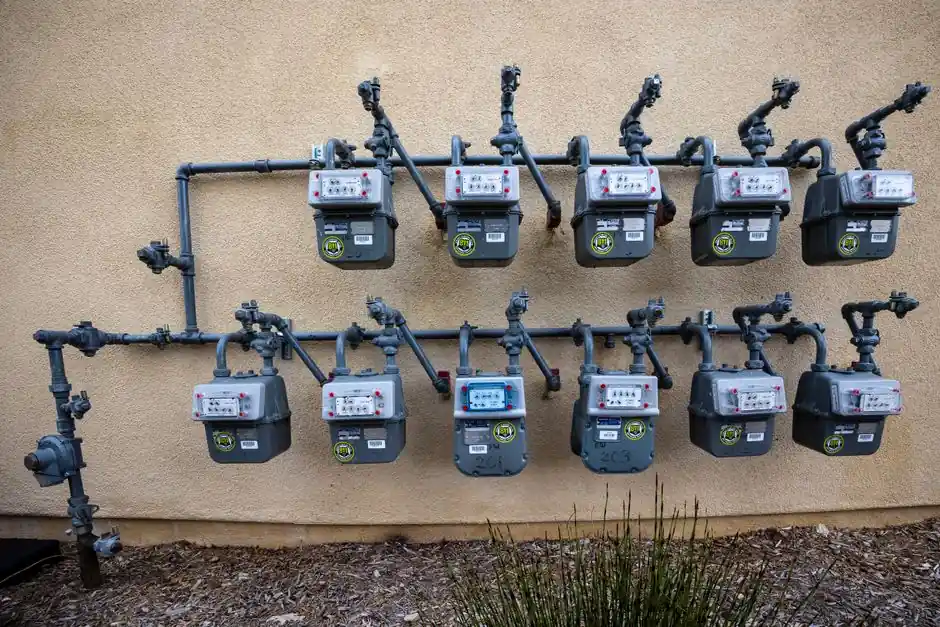
Field evidence from Veramendi
Gas line work shaped by new builds, upgrades, and outdoor living
Veramendi is one of the newest large communities in New Braunfels, and its gas work reflects that: verifying builder rough-ins, resizing lines for upgraded appliances, and running new buried branches for outdoor kitchens and fire pits. The homes are modern, but modern does not mean maintenance-free — settling soil, yard projects, and growing appliance loads all create work. We have traced leaks to construction-disturbed joints, corrected undersized runs before they caused problems, and built outdoor gas systems from a blank patio to a finished kitchen. Every job follows the same discipline: understand the load, build to code, pressure-test it, and leave the system safer than we found it.
Local questions
Do new homes in Veramendi still need gas line inspections?
Yes — new construction benefits from verification more than most people expect. Builder rough-ins can have marginal fittings, missing supports, or sizing that only covers the original appliance package. An inspection checks the visible piping, tests the system for tightness, and confirms the line can handle the appliances you actually have or plan to add. It is especially worthwhile before connecting upgraded appliances or after any yard work near buried lines.
Can you run a gas line for an outdoor kitchen or fire pit in Veramendi?
Yes. We design the outdoor branch around the total load of everything it will serve — grill, fire pit, heaters, or side burners — then run properly sized pipe, buried at code depth with protection, from the house or meter to the project location. We place stub-outs where your layout needs them and pressure-test the run before anything is connected. Just check your HOA guidelines on placement and appearance first, and we will plan the route to fit.
What should I do before digging in my yard in Veramendi?
Call 811 before you dig — for a fence, patio, garden bed, or any project that breaks ground. The service is free, and locators will mark buried gas, electric, water, and telecom lines on your property so you can dig safely around them. In a growing community like Veramendi, lot grading and later landscaping mean lines are not always where you would guess. If a line has already been nicked or exposed, stop work and have it inspected before covering it back up.
What affects the cost of gas line work in Veramendi?
Several factors shape the cost. The length and route of the run matters — a short interior branch costs less in labor than a long buried run to an outdoor kitchen. Accessibility counts: lines through finished walls, under patios, or across established landscaping take more work. The number and size of appliances being served affects pipe sizing and materials. Permits, inspections, and the number of appliances needing connection and checking also factor in. We assess the job first, then explain exactly what the work involves before anything begins.
Workmanship & safety
Trust and compliance
Gas work leaves no room for shortcuts, so every Veramendi job is planned around the fuel-gas code requirements that apply locally. We calculate real appliance loads before sizing a line, pressure-test repairs and new installations before a system goes back into service, coordinate permits and inspections with the local authority having jurisdiction when the scope requires it, and check every connected appliance before we leave. From a single valve replacement to a full outdoor kitchen rough-in, our technicians follow safety-first procedures on every call — because the only acceptable outcome is a system that is verified tight and safe.
Areas we cover
Signs you need gas line repair in Veramendi
New homes have fewer gas problems than old ones — but not zero. Knowing the warning signs helps you catch the small issues Veramendi homes do get: construction-disturbed lines, marginal builder fittings, and systems outgrown by upgraded appliances. If you notice any of these, get in touch and we will investigate.
1. Gas odor inside or outside the home
Natural gas is odorless, so utilities add a rotten-egg smell to make leaks detectable. If you notice it near your meter, along the buried line to an outdoor kitchen, or inside the house, treat it as urgent — especially if the smell is strong or growing.
2. Hissing or whistling near the meter or connections
A faint hiss at a joint, valve, or meter connection can mean gas escaping under pressure — sometimes at a fitting that was marginal since construction. Do not try to tighten anything yourself; gas connections need proper tools and testing to be safe.
3. Dead or dying vegetation along the buried line
A strip of stressed or dead grass following the path of your buried gas service is a classic sign of an underground leak. In Veramendi, where landscaping goes in after the gas line, disturbed soil around the line makes this sign worth watching for.
4. Higher gas bills with no change in usage
If your gas bill climbs while your habits stay the same, a small leak or an inefficient appliance connection could be wasting gas. In a newer home, that often points to a connection issue rather than failing pipe — and an inspection can find it.
5. Yellow, flickering, or sooty flames on new appliances
A healthy gas flame burns steady and blue. Yellow tips, flickering, or soot around the burners on a new range or dryer can signal a supply problem — including an undersized line that cannot deliver enough gas at full demand.
6. Disturbed ground near the meter or buried line
Fresh trenching, fence post holes, or heavy equipment tracks near your gas meter or along the buried line's path are reasons to have the line checked. Even if nothing smells wrong yet, a nicked or stressed line can develop into a leak — and a quick inspection is cheap insurance.
Reliable gas line repair in Veramendi
From builder rough-in verification to outdoor kitchen gas lines, Veramendi's new homes need gas work that is careful and code-aware. If something does not smell — or sound — right, or you are planning an upgrade, call us and we will make sure the gas system is built for it.
Request service